

GOOD DOG:
Problem dog behaviour in Canada: issues and solutions (Part 1
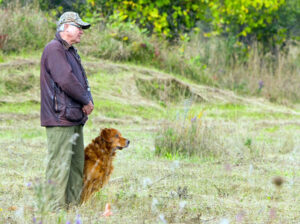
In the previous issue of the Manor Park Chronicle, we elaborated further on our training framework by introducing the importance of both socialization/habituation and humane treatment. In this issue, a number of readers have asked that we explore the challenges and solutions associated with problem dog behaviour, including aggressive dogs and dog attacks. Here we will discuss the frequency and seriousness of problem dog behaviour. In the next issue we will explore in more detail the causes and solutions.
Readers can find previous issues of the Manor Park Chronicle, including this column, online at: https://manorparkchronicle.com/
Problem behaviour: A growing concern
As the reported this past April, Canadian households are welcoming dogs into their homes in record numbers – enabled in part by work-at-home circumstances arising from the COVID crisis.
Canada is now home to approximately 8.3 million dogs. Collectively we spent approximately $7.4 billion on pets and pet food in 2024 (up from $5.7 billion in 2019). At the same time our spending on veterinary, training and other services for pets increased from $3.9 billion to $6.6 billion.
The benefits Canadians receive in return from this investment in our dogs extend well beyond companionship, human health and happiness. Yet for all this investment, Canadians are facing a very significant and growing problem. As the number of dogs increases, so has the incidence of problematic dog behaviour, including attacks and bites, with injuries to people and their pets ranging from minor to life-altering, to fatal.
Unfortunately, there is no comprehensive source of data on the frequency of dog attacks and bites in Canada. Hospitalization and other records account for only the most serious incidents. Most likely, the number of dog-related attacks and less serious incidents are orders of magnitude greater than what is reported. However, dog owners and other residents alike should find what little we know about these dog-related problems to be very troubling. And here is why. Canadians suffer an estimated 500,000 dog bites annually. In the ten-year period between 2010 and 2020, dog attacks resulted in over 6,600 hospitalizations, many of which were for children. One or two fatalities occur every year. Of the 28 human fatalities between 1990 and 2007, over half of these were children under the age of 12!
Dog behaviour in Manor Park
What do we know about problems with dog behaviour in Manor Park? How widespread are the incidents and how serious are the injuries? What is the nature of these problems?
To help answer these and other questions, over the past few months I undertook a series of informal interviews with fellow dog walkers. I inquired as to whether or not they had witnessed or had anecdotal information of dog-related incidents including attacks and bites. Here is what I learned.
Most interviewees described incidents of trespass, defecation, damage to lawns and other property, incessant barking, aggressive behaviour, and dogs running at large. Interviewees also pointed to off-leash areas as particularly dangerous to themselves and their dogs. A surprising number of interviewees also described attack and bite incidents. These have caused serious physical injuries to persons and/or to their dogs, including major wounds, serious falls and broken bones.
Collectively these stories make it very clear, as one interviewee put it, that dangerous dog behaviour consists of two discrete elements. The first are dangerous dog problems, those resulting in attacks and bites. The second are “friendly” dog problems. These are dogs that the owners claim to be friendly, but once off-leash that run up to, charge and/or jump on adults and children causing serious impacts and fall injuries. Clearly this is an issue all dog owners need to pay attention to.
The interviewees were asked to describe what happened in the aftermath of these incidences. I learned that while some dog owners apologize and take responsibility for the damage, others assume no responsibility at all. Most state emphatically that their dog is friendly and not a problem. Some proudly claim, “My dog has never acted like this before.” Others even place the blame squarely on the injured party’s dog. A few interviewees also reported their new-found fear in the presence of any strange dog, regardless of whether it showed aggression or not.
Possible solutions
When asked about possible solutions, interviewees pointed out that dog ownership involves responsibility not only for the dog’s care, but also for the safety of family members and neighbours.
They called for negligent dog owners to:
- recognize when their dog’s behaviour is risking the safety of their family and their neighbours;
- take full responsibility for correcting their dog’s problem behaviour through training and other preventative measures;
- comply with on-leash requirements in public settings; and
- maintain full control of their dog in both on- and off-leash areas.
Finally, many also called for stricter enforcement of local dog control regulations, noting that dog owners who are found liable for dog-related injuries are subject to fines and other enforcement measures.
My friend and dog-training mentor Mike Ducross adds, “The solution to these problems starts with the owners recognizing they are the problem, not the dog. Don’t make excuses for your dog. Correct it!”
Conclusion
In our next column we will explore causes and prevention of problem dog behaviour. In the subsequent column, we will learn how to improve dog-training outcomes through a better understanding of the origins and life history of the domestic dog. In the meantime, below is a training tip you may wish to practice.
Until the next issue of the Chronicle, my sincere thanks to the many dog owners who have provided feedback on the Good Dog column. Thanks also to those I interviewed over the summer. Letters to the editor with your comments, questions or suggestions for future topics are always welcome.
Greg’s Training Tip: Feeding time is training time!
Building obedience commands into the daily feeding routine is an excellent way to reinforce your leadership and reward obedience. Make sure you use your voice command as the trigger, not your hand. If your dog breaks, then calmly re-sit the dog and continue.
• Call your dog to the feeding area with the ‘HERE’ command.
• SIT the dog nearby while you refill both water and food bowls and place them on the floor.
• Using the command ‘Watch Me’, bring your pointer finger to your eye. This helps to ensure your dog makes solid eye contact with you — a key to all communication.
• Point to the food bowl, pause momentarily, and release the dog with a ‘TAKE IT’ command.
• Pat the dog while it begins to feed. Food guarding should be addressed with a very sharp ‘NO!’
• Step away and allow the dog some space to enjoy their meal.