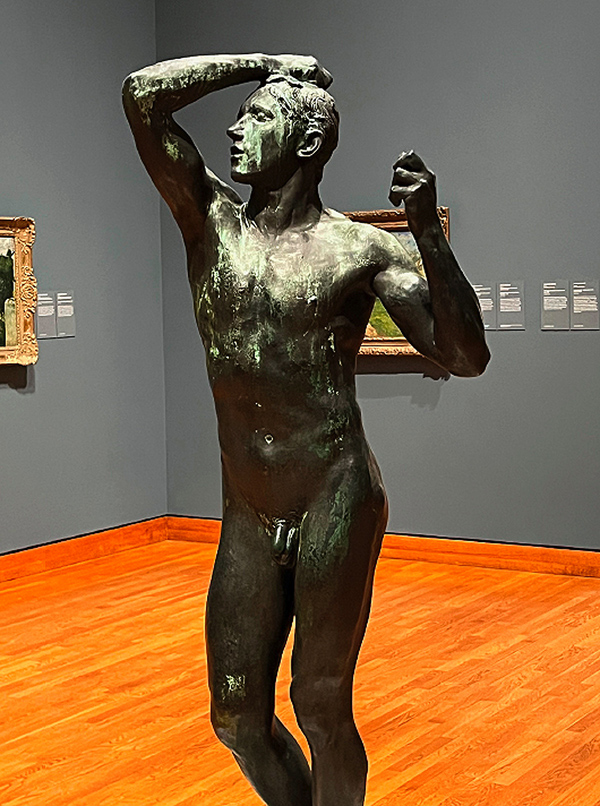
The Age of Bronze: a Rodin masterpiece
Local Ottawa librarians win tour of National Gallery with docent
We’ve all been there! Between the intention and the follow through, between the memory and the reflection, between the nostalgia and the smile, between a deed and the regret, between the compass and the horizon — we seem to ask why, what, when, where.
There are countless ways in which Rodin’s THE AGE OF BRONZE puts the viewer into the in-betweens of the human dilemma — the existential realities that are ever with us. In viewing Rodin’s earliest masterpiece, and ostensibly the first modernist sculpture, no one is indifferent. Here the viewer’s share of art appreciation is huge.
We not only view this work as we walk around it, appreciating it from all angles. We also absorb it and participate in the conversation that Rodin initiated 150 years ago.
We find ourselves quizzically wondering, seemingly at a loss, what this is all about. And indeed, if we stick around for the conversation, we then find ourselves when we recognize the ‘everyman’ standing in front of us. Sticking around is key if we are to lose ourselves and find ourselves again.
How did Rodin manage this modernist artistic feat?
There are many reasons why this sculpture stands out as a modernist masterpiece. To begin with, it defied the strict expectations of the19th Century art academies, the figure’s s stance emphasized an intense realism that ran counter to noble or heroic postures; it also presents a destabilizing emotional and cognitive ambiguity. The viewer is left wondering what this stands for or what’s happening here. This ambiguity was further emphasized by the fact that Rodin’s sculpture was destined for a military cemetery honouring the many French soldiers who, in resounding defeat, were lost during the Franco-Prussian war a few years earlier.
Initially Rodin did not give it a name which further confused the viewers. The name, Age of Bronze, was agreed to as a compromise after discussions and arguments and after six or so other names had been proposed.
Contrapposto
Contrapposto also explains its modernist appeal. Contrapposto was an innovative sculptural technique developed at the beginning of the Greek Golden Age around 480 BCE. What contrapposto gives the viewer is the impression that the sculpted figure is in motion. When viewing the sculpture one can see the human figure’s bent knee in one leg, a slight forward lean of the body and the weight resting on the other unbent leg. This posture creates a slight s-curve from head to feet (see image of The Age of Bronze). This stance — without motion, without walking or a next step being taken — is unsustainable. Without motion the figure would fall down.
So, the viewer’s impression is that the figure is in motion, and thus ‘alive’, ‘real’, to be ‘encountered.’ To this Rodin added a second, if metaphorical, contrapposto moment. The elbow up, the hand reaching above the head, as it were pulling upward as the figure moves forward. The other hand seeking to grasp something, a something beyond the reality of the moment, perhaps? Onwards and upwards it seems to say.
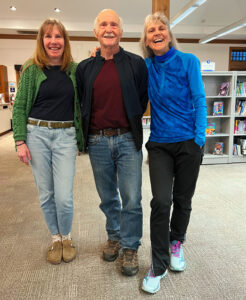
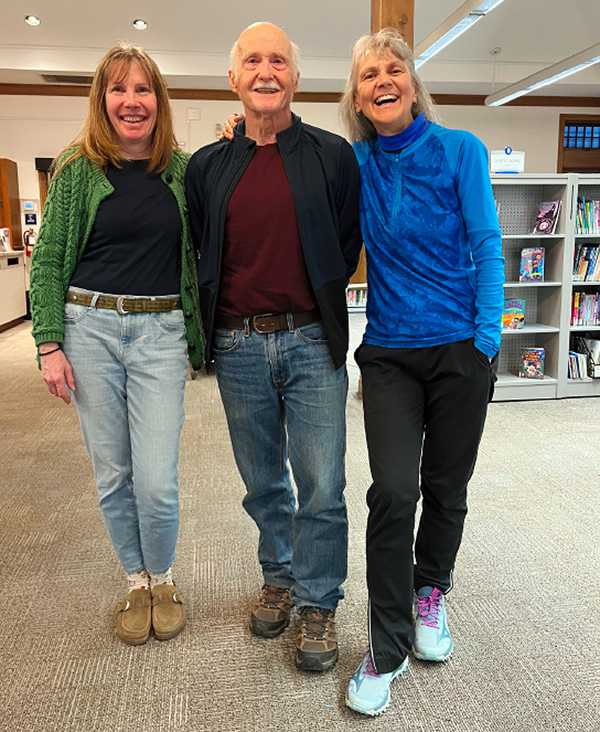
At any rate, the winner(s) of the March-April quiz, are our very own Suzanne White and Martha Hodgson. They are from the Rockcliffe branch of the Ottawa Public Library. They will be getting a full presentation of this work and of others. I was pleased to find out that Suzanne is an experienced sculptor. When we do our meandering tour we will dwell on the Gallery’s sculptures, of which there are many.
Robert Sauvé is a long-time Manor Park resident and doscent at the National Gallery of Canada.